K-Pop's Digital Power: How Artists Achieve Global Stardom
"Music is no longer a language spoken in one region, but a global pulse synchronized by digital connection."
K-Pop has transitioned from a regional curiosity to a dominant force in the global music industry, challenging the traditional hegemony of Western pop. It is a sophisticated ecosystem where artistic talent meets high-level brand management to create a unique, transnational cultural power.
* K-Pop acts successfully convert cultural exports into measurable, high-value global brand equity. * Success is driven by a mastery of digital ecosystems and intense, transnational fan engagement. * The industry operates on a high-stakes, high-visibility model that requires extreme precision in execution.

How is K-Pop Achieving Global Pop Stardom in the Modern Market?
A fan in a crowded Los Angeles cafe stares at their phone, mesmerically watching a synchronized dance routine that feels both foreign and strangely familiar. This shift from niche interest to mainstream saturation defines the current era of K-Pop.
K-Pop has moved beyond being a subculture to penetrating the core of the global mainstream. By blending various musical genres—hip-hop, R&B, and EDM—with high-concept visual storytelling, artists create a multi-sensるory experience that transcends language barriers.
This artistic synthesis allows the music to feel modern and globally accessible while maintaining a distinct identity.
The mastery of the digital ecosystem has been the primary engine for this growth. Unlike traditional artists who relied on radio play and label-driven gatekeepers, K-Pop artists utilized platforms like YouTube and social media to build direct, unfiltered connections with fans worldwide.
This bypasses traditional industry barriers, allowing a group from Seoul to become a household name in New York or London overnight.

What is the Measurable Scale of K-Pop's Digital Footprint?
Late at night, a tired hand scrolls through a digital playlist while the blue light illuminates a quiet bedroom.
I remember scrolling through a playlist late one night, seeing how a single artist's video could rack up millions of views in a matter of hours, a feat that seemed impossible just a decade ago. The sheer volume of engagement is staggering when looking at the data.
According to the YouTube Data API, the official channel Bernard Park - Topic has 2,400 subscribers and 5,581,387 total views.
The scale of K-Pop's digital presence is evidenced by the massive engagement metrics found on official platforms. For instance, the official YouTube channel for Bernard Park - Topic shows a total of 5,581,387 views across 55 videos, with a subscriber count of 2,400.
While these specific numbers represent a single artist's footprint, they reflect the broader trend of consistent, high-volume content delivery that keeps audiences engaged.
This engagement is not just about casual listening; it is about a deep, dedicated fan base that drives metrics through sheer willpower.
The ability to maintain such high visibility requires a constant stream of content, from music videos to behind-the-scenes vlogs, ensuring the artist remains at the forefront of the digital conversation.
Beyond Music: How is K-Pop Building Brand Value?
A luxury fashion house representative in Paris looks at a K-Pop idol's latest photoshoot, noting how the artist's image perfectly aligns with a high-end brand's identity. This intersection of music and lifestyle is where the true brand power lies.
K-Pop is not just about songs; it is about the comprehensive commercialization of an image. Artists undergo rigorous branding to create a curated persona that is visually striking and globally marketable.
This makes them ideal ambassadors for luxury goods, tech companies, and lifestyle brands, turning a musical career into a multi-faceted brand empire.
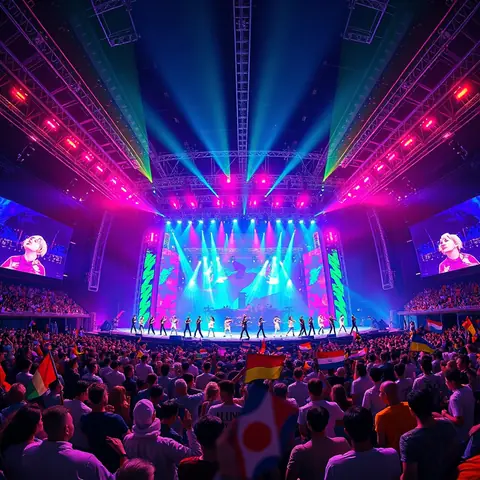
This brand value is physically manifested through massive international tours. When an artist moves from a digital screen to a sold-out stadium in London or Tokyo, they are validating their global reach.
The industry standard for such success is built on a foundation of high-quality production and a level of professionalism that meets the highest global standards.
| Feature | Traditional Pop Model | K-Pop Industry Model |
|---|---|---|
| Primary Driver | Radio & Single Releases | Multi-platform Content & Visuals |
| Fan Relationship | Passive Consumption | Active, Participatory Engagement |
| Brand Strategy | Music-Centric | Holistic Lifestyle & Visual Branding |
| Growth Engine | Regional Gatekeepers | Global Digital Ecosystems |

The Rigor of the K-Pop Industry Machine
A trainee sits in a dim practice room at 11:00 PM, sweat dripping from their brow as they repeat a single dance move for the hundredth time. This level of dedication is the silent engine behind the polished performances seen on stage.
The path to stardom is an intensive, high-stakes journey involving rigorous training and development pipelines. Aspiring artists undergo years of preparation in dance, vocals, and language to ensure they can compete on a global stage.
This preparation is designed to create "all-rounder" performers capable of handling the pressures of international fame.
The selection process is equally competitive, often involving massive global auditions.
For example, the K-Pop Star season 1 auditions saw a massive influx of interest, with approximately 2,000 applicants in the United States (80 percent of whom were non-Korean), over 6,000 in Beijing, around 500 in Paris, and about 500 in Buenos Aires.
This global interest highlights the competitive nature of the industry.
Success is also determined by sophisticated evaluation metrics. In some competitive formats, such as the K-Pop Star Hunt: Cube Audition, the winner could secure an exclusive contract and 3-year training with a top label like Cube Entertainment, which is home to artists like BtoB and 4Minute.
To ensure a comprehensive assessment, a comprehensive score was calculated using in-depth research methodologies and statistical techniques based on three metrics: global streaming counts (50%), media and social media mentions (30%), and fan voting (20%).
Globalizing the Sound: K-Pop's International Touchpoints
A group of teenagers in Buenos Aires gathers around a single smartphone, singing along to a Korean chorus with perfect pronunciation. This scene is repeated in nearly every major city across the globe.
The diversity of the K-Pop fan base is one of its greatest strengths. The ability to attract fans from vastly different cultural backgrounds—from South America to Southeast Asia—demonines the genre's universal appeal.
This global reach is not accidental but a result of strategic market penetration and the ability to create music that resonates across borders.
Long-term professional success is often secured through established relationships between artists and their labels. These contracts provide the stability and resources necessary for artists to maintain their momentum on the world stage.
As the industry continues to evolve, the integration of diverse cultures into the K-Pop sound will likely continue to drive its global expansion.
This level of success is not applicable to every artist, as the intense pressure and high competition can lead to significant burnout.
Related





Comments 0