K-Pop Music Videos: Cinematic Worlds Beyond the Song
"A music video is no longer just a window to a song; it is a complete, breathing universe where sound and sight collide to create a new reality."
K-pop music videos have evolved from simple performance clips into high-budget, cinematic artifacts that blend avant-garde visual storytelling with complex musical compositions. They serve as the primary engine for global engagement, turning a three-minute track into a multi-sensory experience.
* The synergy between sonic structure and visual narrative drives the global impact of modern K-pop releases. * Visual direction moves beyond simple choreography to establish cohesive thematic arcs that mirror emotional journeys. * The massive scale of production reflects a globalized industry standard, demanding high technical execution across sound and image.

How does the musical composition establish the narrative foundation?
At 2:00 AM in a dimly lit Seoul studio, the air smells like stale coffee and ozone as a producer adjusts a single frequency on a mixing board. The sudden drop in bass causes the heavy acoustic foam on the walls to vibrate, signaling a shift in the track's emotional weight.
The foundation of a great music video lies in its ability to map song structure to visual shifts. In a well-constructed track, the verse, chorus, and bridge act as the architectural blueprints for the camera's movement.
When a song moves from a stripped-back verse to a maximalist chorus, the visual language must respond—either through a sudden burst of color or a shift in cutting pace.
Sound design plays a critical role in building tension. Sudden tempo changes or sudden drops in instrumentation often signal a transition from a grounded reality to a dreamlike sequence.
For example, a sudden silence or a heavy, distorted bass hit can act as a "visual beat," prompting a hard cut to a new location or a different camera angle.
Vocal delivery also serves as a narrative device. The way a singer's tone shifts—from a breathy, intimate whisper to a powerful, belted high note—dictates how the artist is framed.
A whispered line might be captured in a tight, handheld close-up to create intimacy, while a soaring chorus demands wide, sweeping shots that capture the scale of the set. This deliberate pacing ensures that the build-up toward the song's peak feels earned and inevitable.
But as the music builds, the visual world must also expand.

Why does the visual language dictate the spectacle?
A director peers through a monitor at 10:00 AM, watching a high-contrast scene where deep blues meet vibrant oranges. The color grading is so intense that it feels like another world entirely, stripping away the mundane to reveal a stylized truth.
Modern music videos often move beyond standard tropes—like the "dancing in a warehouse" cliché—to embrace cinematic-quality directing. This shift toward high-concept storytelling means that every frame is treated like a still from a feature film. Color palettes are used as emotional shorthand.
A muted, desaturated palette might be employed to convey loneliness or introspection, while high-saturation, high-contrast grading is used to signal energy, joy, or surrealism. These color choices dictate the mood of a segment before a single lyric is even heard.
Set design and symbolism often carry the heavy lifting of the narrative. A recurring motif, such as as a cracked mirror or a blooming flower, can symbolize growth, decay, or the fragmentation of identity.
These elements aren't just decorations; they are symbolic weights that deepen the viewer's engagement.
Choreography, too, has become a visual script. It is no longer just about synchronized dance moves; it is a physical manifestation of the lyrics.
When a group moves in unison, it can represent solidarity or the overwhelming power of a collective, turning dance into a storytelling tool that matches the rhythmic pulse of the music.
However, the sheer size of these productions raises questions about the global stage.
How does the global scale drive production value?
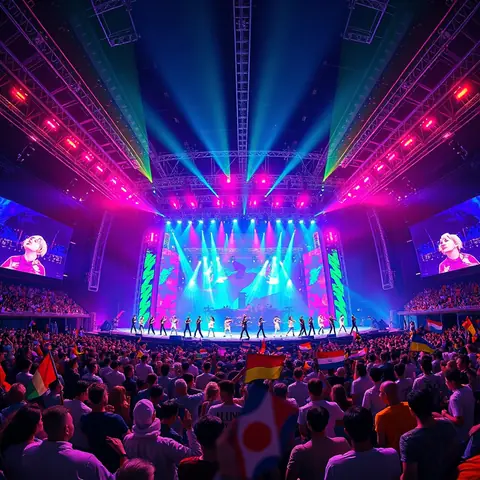
A massive soundstage in Seoul is filled with specialized equipment, from motion-control rigs to massive LED walls, as a crew prepares for a high-stakes shoot at 6:00 AM. The sheer scale of the operation is staggering, reflecting the massive investments flowing into the industry.
The scale of production in modern K-pop is immense, involving massive budgets for custom-built sets, international locations, and cutting-edge post-production. This investment is what allows the genre to maintain a competitive edge on the global stage.
The digital footprint of these videos is unprecedented. Because they are designed to be visually arresting, they naturally lend themselves to virality and social media discussion. This digital-first approach ensures that a release isn't just a local event but a global moment.
The impact of these releases is often measured by immediate, massive engagement. For instance, the massive scale of the industry is evident in the way hits break records: the 2020 release of the hit "Butter" garnered over 108 million views in its first 24 hours.
Such milestones highlight how the visual-sonic package can capture the world's attention instantly.
| Element | Traditional Music Video | Modern K-Pop Music Video |
|---|---|---|
| Primary Goal | Promotional clip for a song | Immersive, cinematic world-building |
| Visual Style | Often literal or performance-based | Highly stylized, symbolic, and conceptual |
| Storytelling | Often follows a linear or simple plot | Complex, non-linear, and metaphor-heavy |
| Global Reach | Targeted at specific music fans | Designed for global digital virality |
While the scale is impressive, the true magic happens when the artist becomes the vision.

How does the artist translate sound to sight?
An artist stands before a mirror at 4:00 PM, adjusting their costume to match the fierce, avant-garde concept of their new single. They aren't just a singer; they are becoming a character within a carefully constructed visual universe.
The success of a music video often depends on how well the artist's persona aligns with the concept. The chosen persona must interact with and interpret the song's core message to make it believable. If a song is about rebellion, the artist's styling and expressions must embody that defiance.
There is a delicate balance between performance and narrative roles. In some scenes, the artist is clearly "performing" for the camera, showcasing their charisma and dance skills. In others, they are acting out a role within a scripted narrative.
The best music videos seamlessly blend these two modes, so the performance feels like a natural part of the story.
When I first watched a high-concept concept film for a group in 2024, I realized the artist wasn't just singing; they were living the character's emotional arc through every micro-expression.
The collaboration between the director and the artist is the ultimate fusion point. When the musical intent and the visual execution are perfectly synchronized, the result is a masterpiece that transcends the music alone. This synergy is what turns a catchy song into a cultural phenomenon.
But how do the technicians actually pull this off?
What are the technical secrets to synchronization?
A specialized editor sits in a darkened room at midnight, meticulously aligning a frame-accurate cut to a drum beat. The relationship between the split-second timing of the edit and the sonic pulse is what gives the video its infectious energy.
The relationship between editing rhythm and musical beat structure is one of the most critical technical elements. The cutting pace—how often the scene changes—is often tied directly to the tempo of the music.
Faster cuts during high-energy sections create a sense of urgency, while longer, lingering shots allow for emotional breathing room. Sound mixing and visual pacing must work in harmony to avoid sensory overload.
If the visuals are too frantic while the music is slow, the viewer experiences a "cognitive dissonance" that can break the immersion.
To achieve this level of precision, directors often follow a rigorous technical checklist:
- Match Cuts: Transitioning between two different scenes by matching the shape or motion of an object to create a seamless visual flow.
- Rhythmic Cutting: Timing every cut precisely to a specific beat or percussive element to own the viewer's pulse.
- Visual Pacing: Using slow-motion or time-lapse techniques to manipulate the perceived passage of time against the music's tempo.
- Sound-Driven Camera Movement: Moving the camera in sync with a sweeping violin or a sudden drum hit to ground the viewer in the sound.
The technical mastery of these elements is what separates a standard music video from a groundbreaking piece of art. As technology advances, the boundaries between what is heard and what is seen will continue to blur.


Comments 0